Alchemy Journal Vol.8 No.1
Vol.8 No.1
Summer 2007
CONTENTS
ARTICLES
Planetary Attributions of Plants III
FEATURES
EDITORIAL
Spagyric Medicine and Vitiation of Blood and Lymph
Before going into depth about the meaning of “Vitiation of Blood and Lymph,” let me explain first why I have chosen Spagyric medicine as the only possible solution to offer recovery from all kinds of ailments whose roots always lay hidden in the “Vitiation of Blood and Lymph.”
What are Spagyric Medicines?
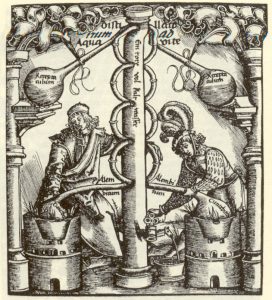
The medicines, tinctures or essences, if prepared by following the procedures of Separation, Purification and Recombination are called the Spagyric way of making a medicine. By the methods of Separation and Purification we get the three purified elements of the Plants (Herbs) and then recombine these, which is also called “Cohobation” (Reassembling of the three purified elements of the Plant by means of Spagyrism).
It is proved by various researchers that it is mostly Spagyric essences that are the true medicines and also only the Spagyric essences that are able to overcome the “Vitiation of Blood and Lymph.”
How and Why?
While making Spagyric essences, they get empowered with the three things:
- a) Organic compounds basically of lower molecular weight that can easily diffuse through the semi permeable membranes of the cells of tissues,
- b) Inorganic elements such as macro, micro and trace elements,
- c) Energy that can also be described as a chain of atoms bearing the properties of cations and anions, that is ions with positive or negative charges, that are able to take part in the biochemical process or reactions happening within the body’s cells.
Thus, we can conclude ultimately that a Spagyric essence is rich in inorganic material, i.e. plant derived minerals salts which can be easily absorbed by the body of living organisms. Physiology revealed that mineral salts are important for all types of biochemistry or biochemical reactions that occur within the cells or tissues. Similarly, trace elements found in very small quantity in living organisms are very crucial for life, play an important role in metabolic reactions and act as catalysts.
Now what is the “Vitiation of Blood and Lymph” and how does it occur? How are Spagyric Essences Suitable for De-vitiation?
We know our body is a result or made up of 24 different elements, but just four of these make up the major part of our body weight. These four are: oxygen (O), hydrogen (H), nitrogen (N), and carbon (C). Hydrogen and oxygen combine to form water. The balance of chemicals in our body depends on our age.
Chemical Make up of Our Body or Living Organisms
Chemicals are carried around the body dissolved in water. The most important of these is salt or sodium chloride (NaCl). The chemical make up of the body consists of three basic elements: major or macro elements, minor or micro elements and trace elements. The body needs specific amounts of chemicals so that essential chemical reactions can take place to keep the body in good working order.
1) Major elements are: oxygen, carbon, hydrogen and nitrogen.
2) Minor elements are: calcium (1.5%), phosphorus (1.0%), potassium (0.4%), sulfur (0.3%), sodium (6.2%), chlorine (0.2%) and magnesium (0.1%).
3) Trace elements are 0.1% of the body’s weight but are very crucial for life. The main trace elements are: chromium, cobalt, copper, fluoride, iodine, magnese, molbedinum, selenium, silicon, tin and vanedium.
The need for water is one of the strongest human driving forces. Water is a transport system and a laboratory for vital chemical reactions. A drop in body water content of 5% causes strong thirst and a drop of around 20% results in death. The human body is composed of many different types of molecules. Molecules consist of one or more atoms of one or more elements joined by chemicals bonds.
So Then What is “Vitiation of Blood and Lymph?”
We know that the formation of specific proteins-enzymes may be hampered by the known availability of specific amino acids/elements in the body and this may cause the stopping or malfunctioning of a specific physiological activity which, if not overcome early, may lead to pathology of the cells and tissues.
Blood and lymph are the only two channels to provide all kinds of transportation of the precursors of biomolecules required for biochemical reactions and, if hampered, may cause the stopping or malfunctioning of a specific physiological activity in specific cells and tissues. Thus we can say that if the precursors of biomolecules required for the proper metabolism of cells and tissues get deficient during transportation through the blood and lymph “Vitiation of Blood and Lymph” occurs.
Therefore, only Spagyric medicines, which are rich in precursors of required biomeolecules, can overcome the problem of this deficiency of cells and tissue. So, when they are prescribed for the ody, they are able to de-vitiate the blood and lymph by supplying the required deficient precursors of the biomolecules to the body cells for their normal structure and function.
Are Spagyric Essences Rich in Precursors of Biomolecules?
Yes, biomolecules play an important role in living systems and are made up of carbon, oxygen, hydrogen, and nitrogen as major constituents. These major constituents are possible to get naturally only by means of Spagyrism. This process is widely used in the system of electrohomoepathy medicine that believes in the cure of diseases by de-vitiation of the blood and lymph.
Dr. Ajit Singh practices electrohomeopathy and acupuncture as well as conducts research on medicinal plants in Punjab, India. Dr. Singh can be contacted at: [email protected]. Website:www.sbeamattie.com.
The medicines, tinctures or essences, if prepared by following the procedures of Separation, Purification and Recombination are called the Spagyric way of making a medicine. By the methods of Separation and Purification we get the three purified elements of the Plants (Herbs) and then recombine these, which is also called “Cohobation” (Reassembling of the three purified elements of the Plant by means of Spagyrism)
Three Poems from liber xix: differentia liber
By Paul Hardacre
Poetry, like alchemy, is largely ignored, and is effectively marginalized from mainstream culture. Most people couldn’t care less about either artform, and yet both house so much of value to humanity. Poets, like alchemists, are dwellers on the fringe; often characterized, somewhat tragically, as undesirables, freaks or lunatics. Poets are interpreters of, as A.E. Waite put it in his little-known masterpiece, Azoth; or The Star in the East, “the unrealizable beauty of that which is behind the veil,” doing so ‘by the graciousness of the veil.”
As he so eloquently states:
“In this matter the poets are our only interpreters – that is, legitimately – because the problem is outside science, which is concerned with the veil alone; and it is outside ordinary philosophy, because ordinary philosophy has affirmed that the reality is unknowable; and the best conclusions from analogy are to be learned of the masters of analogy, of the kings of interpretation, of those who see furthest, who possess that intuition which is the deepest instrument of supersensual research, and is in fact that higher faculty, that sixth sense, at which we have already hinted, which we now openly affirm is par excellence the mystical instrument. Those only who are in touch with poetry can have part in the life to come. It is therefore eminently, and before all things necessary, that we should see after the manner of the poets, and the mystical philosophy of Nature is to be found in them.”
Writing poetry for more than ten years, I have explored poetic styles, starting with early lyrical and confessional works, and gradually drifting across the dream-sea towards less sentimental shores, to the sometimes chilly intellectual islands of language poetry (langpo) and other post-modern, non-traditional and non-narrative forms where the reader plays the significant role of extracting – or perhaps even allocating – meaning from a poem. The ‘true’ meaning of the poem is often hidden or encoded within multi-layered, largely unpunctuated, stream-of-consciousness-esque flow of allusive words and sentences and phrases and images … not always images, but with my own poems, I tend towards image-scapes. One might call them image-puzzles; telling some kind of exoteric ‘story’ on the surface, but obfuscating the true meaning. In this sense, my poems are acts of the occult, whereby I tantalize and stimulate language lovers (i.e. the mind) but shield or disguise the truth (i.e. the pearl, the heart) – a kind of poetic ‘Green Language’ tapping into various traditions and lineages in contemporary Australian and North American poetics.
My exploration of the Language of Thoth, the Gay Speech, the Language of the Birds, the Language of God – call it what you will – intensified significantly during the time of the protracted deaths of both my mother and father. During this nineteen-month period I began to think about magic and alchemy, reconnecting with a life-long fascination that had slipped for some years. The spirit of poetry still burned within me, but it had been joined by something else. I became overtaken with the desire to realize the Stone – not simply to understand it conceptually or philosophically, but to facilitate its manifestation.
As both my parents crept closer to their time to sleep with the earth, the Universal essence flung alchemy before me, every step of the way … so many markers along an apparent path, so long as I kept myself ‘open’ and didn’t try to force anything. There was a transmutation of this matter known as ‘me’ whereby a poetic-alchemical product was created … for the Hermetic Child of Sun and Moon to be born, both parents must die. This is a painful birth, to be certain. I honestly see myself as a living alchemical product, heading towards the Stone. The poems in liber xix: differentia liber record this transmutation process, this evening of myself to include more ‘heart’ to balance all of my out-of-control intellectualism.
The nineteen x nineteen-line poems that comprise the suite also document the difference between modern man, the immature Adam (45) and God (26). It took nineteen months to write the nineteen-poem suite; nineteen months for both parents to die, and indeed, there are many other nuances of nineteen of significance, both inside and out, above and below. Writing each poem required me to establish contact with the source, the essence, which wasn’t always easy or pleasant. These poems changed me, and I know that neither my self nor my writing will be the same again.
Coinciding with the agonizing demise of my mother and father, and with my desire for manifesting the Stone (spiritual and physical), I had a chance meeting with an alchemist/spagyricist who quickly became like a brother to me. I read more and more, discussing the Hermetic arts with my long-time partner and soror mystica, and my newfound brother. I was soon introduced to his alchemical mentor, and since that time, I have had the pleasure of knowing other aspirants to the Stone. All the while, my poetry and alchemy became united together, as one art for interpreting Nature.
Poetry has been my gateway to alchemy, as has the death of my solar and lunar progenitors. It hasn’t been an easy path, but I am happy with what I have seen and learnt and felt along the way, and where my path seems to be heading in the future. And why not? As Waite put it, “The possession of the spirit of poetry is … an indispensable condition of achievement; it is the agent of transfiguration; it is the philosophic stone which transmutes the world and man.”
burning god
“With a great howl of rage and hate he snatched
the body of his murdered brother out of the chest,
tore it into fourteen pieces, and scattered them far
and wide over the land of Egypt.”
– Roger Lancelyn Green, Isis and Osiris
“Egypt, then, was the eye and heart of the Earth;
the Heavenly Nile poured its light-flood of wisdom
through this dark of the eye, or made the land throb
like a heart with the celestial life-currents.”
– G.R.S. Mead, Thrice-Greatest Hermes (vol. iii)
black dirt heart he licks her secret
parts or waters stars a swallow nursed
by isis wagered light & shoulders clay
so made & moist or reared from grass
he burns as summer beams a world of
river skin like siamese moon her rock
beside the sea the great green fire or
flower of the clouds towards the night
his wordless book & blankets soaked
with dew she bends the sun to white
the were-not-days a ros that starts with
spring: the oldest death a pearl he swiftly
seized & flayed the skin from head &
mixed the bones with flesh & burned
the mountain / forged his ruddy head
from blackness stained with acid gift the
stink of furnace leaves or bark & fruit her
awful look a coffin-boat & spotted red like
blood her young are fed (or slain / or gold
called down from the air
“Out of chaos God formed substance, making what is not
into what is. He hewed enormous pillars out of ether
that cannot be grasped.”
– Sefer Yetsirah 2:6
“The whole secret of the art was said to be contained in
the maxim Solve et coagula, ‘Dissolve and combine’.
To ‘dissolve’ means to strip away a substance’s
characteristics, to ‘combine’ is to build up a new substance.”
– Richard Cavendish, Alchemy
clothe itself in flesh & whiplike bones
his troubled dreams already dead she
rose to shake from far below in earth
& walked the house the dark & faintly
red he blew the lamp or trees or massed
outside in firetop weeds & rain his tank
of stone & tears he calls it lux it hurt to
call in bedroom graveyard light like winter
aires the heart as meat immersed in rills &
freshets closed the middle span his box
or trunk collected blood or rings the edge of
woods & birds an elder snare or ghoulsign
hollow sun her august keys beneath the open
slate & stuffed or hollow men suggested rats
the never white in glass or made the walls a
spark not black not red not green she chops
in tantric battle all we are & would be (change:
drums that fade to desert pixies dress she sends
her cement wings & wine a no place empty face
from the dark skies, from the dark moon
“Naked the goddess mother lies in hell;
naked. Ninazu’s mother lies exposed,
the holy garment fallen from her shoulders,
bare are the breasts of the mother, Ereshkigal.”
– Cry of the Dead, from Gilgamesh
“There is no death of anyone, save in appearance, just as
there is no birth of any, save only in seeming.”
– Apollonius of Tyana
dog or sometimes cat assailed he claws
at legs or clothes his horns & bells the end
of moon of lotus seat the love of clouds &
death-like sounds like wheels a sea of jewels
all kinds of bones her noose & skull in red
& feeding wolves her tears on beating wings
all snaky-tressed & wordless / book of birds
at dawn a falling dew from too dark skies &
forests earth & dust the light (in beauty cheeks
the forehead bright & high the neck like shell
the heart at times eats stones & lastly thunder
cuckoos flutes & bees the tree as food a house
or road & coiled for certain worms or one she
blinks & rips & hooked in hair her fingers rent
the bloody head her face & breasts she shrieks
& swathed in glitter tries to crawl his corpse-light
eyes & lower (dead) she cries the skins of beasts &
set but made not known the day she lost or hides
as dark or maybe emptied / missed with dre
Paul Hardacre was born in Brisbane, Australia in 1974. He is the Managing Editor of papertiger media, publishers of the papertiger: new world poetry CDROM, hutt poetry ezine, anything i like art ezine, and the soi 3 modern poets imprint. And he is a published poet. The nineteen nineteen-line poems of his latest work, liber xix: differentia liber, took one and a half years to complete and explore the mysteries, hermetic and alchemical cosmology, cabala and the ‘green language’, occult and devotional systems, the reconciliation of opposites, and death – both familial and mythological. With his long-time partner, artist and graphic designer Marissa Newell, he currently divides his time between Brisbane, Australia, and Chiang Mai, Thailand.
Poetry has been my gateway to alchemy, as has the death of my solar and lunar progenitors. It hasn’t been an easy path, but I am happy with what I have seen and learnt and felt along the way, and where my path seems to be heading in the future. And why not? As Waite put it, “The possession of the spirit of poetry is … an indispensable condition of achievement; it is the agent of transfiguration; it is the philosophic stone which transmutes the world and man
“Naked the goddess mother lies in hell;
naked. Ninazu’s mother lies exposed,
the holy garment fallen from her shoulders,
bare are the breasts of the mother, Ereshkigal.”
– Cry of the Dead, from Gilgamesh
Planetary Attributions of Plants III:
A Compilation According to Eleven Bibliographic Sources Currently in Print.
By Johann F. W. Hasler
Editor’s Note: The previous two issues of the Alchemy Journal featured the bibliographic research conducted by Johann Hasler with the publication of the first two parts of a series identifying the planetary attributions of plants. The first part included the table for the Sun. The second part included the publication of the next three tables for the Moon, Mercury and Venus. This issue includes the third and final part with the publication of the tables for Mars, Jupiter and Saturn. The Introduction to the Series, Notes to the Tables and the Bibliographic Key, published in the previous issues, are included again for easy reference.
Introduction to the Series
During the several years in which I have been studying the magical and alchemical properties of plants according to the Wiccan and Hermetic traditions, I have several times faced at first the confusion, and later the frustration, of noticing that different sources assign different planetary attributions and correspondences to the same plants.
One is often faced, while preparing a recipe or determining the components which are more appropriate for a certain working, with the possibility of a certain plant one wishes to work with being assigned to the influence of three, four, and sometimes even five different planets, according to different authors.
When these planets are somehow related (like Mars and Saturn being considered in the past as ‘evil’ or of detrimental, limiting energy), one might attribute this to the development of astrological understanding through time and consequently consider them of the same general limiting intention in light of the more current knowledge. But when the possibilities offered can not be so clearly grouped into one general aura or type of energy, one is left with no other solution than to make an almost random choice based more on the preference one might have for a certain author, publisher, tradition or period of the history of magic than on any other data, especially if one has limited previous experience in working with the problematic plants in question.
In time I have come to accept this as a rather typical – and actually something to be expected – of spiritual sciences such as the Hermetic or Occult sciences, in which personal insight and individual discoveries through meditation, contemplation, or actual communion and communication with the spiritual essences or patron spirits of the plants are considered as valid sources of information as their pharmacological constituents would be. As a matter of fact several of the sources that cite the planetary attributions of plants are well aware of this fact and specifically list more than one planetary correspondence in the entries for some plants, pointing out this fact clearly in their prefaces, footnotes or correspondence tables.
In this series of seven compiled tables of correspondences I do not wish to comment or establish a judgment over the validity of this and other problematic and strongly criticized epistemological approaches of the alchemy, magical herbalism, Hermeticism and other occult sciences. Yet as a complement to the existing qualitative data which such approaches yield, and which exist profusely, I present here some quantitative data, in this case of a bibliographical nature, so that a decision on the planetary correspondences of plants may be taken by the practitioner based on his or her preference of certain well-known authors in the field.
I have gotten a hold of eleven recently printed sources that include if not whole tables at least a mention of the planetary correspondences of plants. They include a manual of evocation of spirits, a manual on planetary magic, a commented and edited re-print of Agrippa, a manual on the construction of talismans, two manuals on practical alchemy and several magical reference works, either specifically devoted to botanical magic, magical herbalism and magical aromatherapy, or of a wider scope.
Apart from Donald Tyson’s reprint of Agrippa’s Three Books of Occult Philosophy (first appeared in Antwerp in 1531) all of the sources are modern, and most are still in print and easily obtainable through bookstores or the Internet. I have chosen these types of sources because the intention of this series is to be an aid to practicing spargyricists, rather than a bibliographical referencing source for historical studies. I have included the Agrippa not only because it is perhaps the single most important original source of contemporary natural magic (magia naturalis) but also because, as the rest of the sources I refer to, it is readily available commercially, having been reprinted by Llewellyn in 2004.
Notes to the Tables
All types, parts and components of plants (trees, shrubs, herbs, seeds, fruits, barks, roots, etc.) have been included in the same table. Likewise, what authors divide in their books into categories such as trees, herbs, oils, essences or incenses/perfumes, has been included in the same table.
There is one table for each of the seven ancient planets of alchemy. The plants that different authors assign to each of the planets are listed here, alphabetically. After the name or variations of the name of plants, a list of superscript letters appears. The key is the first letter of the surname of author or authors of the specific books surveyed, listed below under “Bibliographic Key”. When there are variations in spelling but it is clearly the same plant, the bibliographic key specifies which author uses what spelling. For example, CamomileFA, D&Ph, Z, ChamomileW means that Frater Albertus, Denning & Phillips and Zalewski spell the plant camomile, but Whitcomb spells is chamomile.
When there are variations in spelling, as listed above (camomile and chamomile, hellbore and hellebore and so forth), all variations have been listed, usually one after the other in the same line of the table, but sometimes also separately, in alphabetical order. No attempt of correcting possible errors or inconsistencies in this respect has been attempted; the tables simply refer to which book refers to what in what way. If Zalewski, for example, writes celadine while most other authors write celandine, this has been duly noted but not expurgated or corrected in any way.
As these tables are thought as an aid for practicing spargyricists, they are designed as a practical directory for quick reference. This is why, for easier location of particular plants, some have been entered twice, always in alphabetical order. For example, black pepper appears both as Black pepper but also as Pepper, black. The same rule applies to all plants with composite names, or in the case when spelling varies so greatly as to warrant a different line in the table.
Bibliographic key:
| A | Agrippa Von Nettesheim, Henry Cornelius, The Three Books of Occult Philosophy: A Complete Edition (St. Paul, MN: Llewellyn Publications, 2004) [1533], edited by Donald Tyson. Book I, chapters 23-29 pp.75-95. |
| C1 | Cunningham, Scot, Magical Aromatherapy: The Power of Scent (St. Paul, MN: Llewellyn, 1989), p. 166. |
| C2 | Cunningham, Scot, Cunningham’s Encyclopedia of Magical Herbs (St. Paul, MN: Llewellyn, 2002), pp. 271-273. |
| C&C | Cicero, Chic & Cicero, Sandra Self Initiation into the Golden Dawn Tradition, pp.281-282, 291. |
| D&Ph | Denning, Melita and Phillips, Osborne, Planetary Magick: a complete system for knowledge and attainment (St. Paul, MN: Llewellyn Publications, 1992) |
| F | Farrell, Nick, Making Talismans: living entities of power (St. Paul, MN: Llewellyn Publications, 2001) p. 171. |
| FA | Albertus, Frater, The Alchemist’s Handbook: Manual for Practical Laboratory Alchemy (New York: Samuel Weiser, 1974). |
| J | Junius, Manfred M., The Practical Handbook of Plant Alchemy: An Herbalist’s Guide to Preparing Medicinal Essences, Tinctures, and Elixirs (Rochester, VT: Healing Arts Press, 1993) [1979], pp. 102-122. |
| K | Konstantinos, Summoning Spirits: The Art of Magical Evocation (St. Paul, MN: Llewellyn Publications, 2002), p.146. |
| W | Whitcomb, Bill, The Magician’s Companion: A practical encyclopedic guide to magical & religious symbolism (St. Paul, MN: Llewellyn Publications, 2001) pp. 467-472. |
| Z | Zalewski, Christine L., Herbs in Magic and Alchemy: Techniques from Ancient Herbal Lore (Saint Paul, MN: Llewellyn Publications, 1990), pp. 115-124. |
| plant correspondences of mars |
| Aconite A |
| All cacti D&Ph |
| All kinds of aloe J |
| All kinds of mustard J |
| All thistles D&Ph |
| All-heal FA |
| Allspice W, C2 |
| Anemone J |
| AnemoneC2, J |
| Antirrhinum D&Ph |
| Arbutus D&Ph |
| Armoniac (gum-resin) A |
| Arrowrtoot D&Ph |
| Asafoetida D&Ph,W, C2 |
| Ascolonia (scallion or Welsh onion) A |
| Ash D&Ph, K |
| Avens J |
| Bamboo D&Ph |
| Barberry FA, J |
| Basil FA,W, C1, C2, C&C, J |
| Benedictus FA |
| Black pepper C1 |
| Black radish J |
| Black snakerootC2 |
| Blessed Thistle J |
| Blind nettle J |
| Bloodroot D&Ph, Bloodroot C2 |
| Bloodwort J |
| Box J |
| Briony FA, C2 |
| Broom C1, C2 |
| Brownwort, knotty J |
| Bryony J |
| Burze bush FA |
| Buttercup A |
| Cactus C2, Cacti D&Ph |
| Cardines FA |
| Cardis (cardoon, thistle) A |
| Cardoon A |
| Carrot W, C2 |
| Cartabana A |
| Catnip J |
| Cattail W |
| Cedar, red J |
| Chili pepper W, C2 |
| Chinese rhubarb J |
| Coffee C1 |
| Common figwort J |
| Common nettle J |
| Coriander W, C1, C2, J |
| Crowfoot (buttercup) A, FA |
| Crowfoot, cursed J |
| Crowfoot, marsh J |
| Cuckoopint J |
| Cumin D&Ph,W, C1, C2 |
| Curry W, Curry leaf C2 |
| Cursed crowfoot J |
| Daisy J |
| Damiana W, C2 |
| Dandelion D&Ph |
| Dead nettle J |
| Deerstongue C1, C2 |
| Dog tree A |
| Dogrose J |
| Dovesfoot FA |
| Dragonsblood D&Ph, Dragon’s Blood W, F, C&C, C2 |
| Dwarf elder J |
| Dyer’s broom J |
| Elder, dwarf J |
| Emetic nut J |
| Euphrobium A |
| Everlasting flower J |
| Figwort, common J |
| Flax-weed FA, Flax J |
| Galangal D&Ph, C1, C2 |
| Garlic FA, W, C1, C2, A, J |
| Gentian FA, W, C2 |
| Gentian, yellow J |
| Geranium J |
| Ginger W, C1, C2, C&C |
| Goldflower J |
| GorseC2 |
| Grains of Paradise C2 |
| Ground pine FA |
| Harrow, thorny J |
| Hawthorn FA, W, C2, J |
| Hedge-hyssop FA, J |
| Hellbore A |
| Herb Robert J |
| High John Conqueror D&Ph, C2 |
| Holly D&Ph, W, C&C, C2 |
| Honeysuckle J |
| Hop FA, J, Hops W, C1, C2 |
| Horseradish W, C2, J, Horse radish FA |
| HoundstongueC2 |
| Immortelle J |
| Knotty brownwort J |
| Lamium J |
| Laurel A |
| Leek W, A, C2 |
| Lignium aloes F |
| Madder FA, J |
| MagueyC2 |
| Marsh crowfoot J |
| Master-wort FA, Masterwort C2 |
| Mezereon J |
| Mountain ash D&Ph |
| Mountain mahogany D&Ph |
| Mustard D&Ph, W, A, C2 , Mustard, all kinds J |
| Nasturtium onion C1 |
| Nettle FA, W, A, C&C, C2, Stinging nettle D&Ph, J |
| Nettle, blind J |
| Nettle, common J |
| Nettle, dead J |
| Nicotiana D&Ph |
| Norfolk Island Pine C2 |
| Oak J |
| Onion FA,W, A, C2, J |
| Opoponax D&Ph |
| Paprika J |
| Penny Royal W, C1, Pennyroayal C2 |
| Pepper tree D&Ph, C2 |
| Pepper W, C&C, C2, Blackpepper C1 |
| Pepper, red, various kinds J |
| Peppermint D&Ph, K, C2 |
| Pepperwort FA |
| PimentoC2 |
| Pine W, C1, C2, C&C, Pine, all kinds J |
| Pinneapple J |
| Plantain J |
| Poison nut J |
| Poke Root C2 |
| Prickly AshC2 |
| Prunella vulgaris FA |
| Radish W, A, C&C, C2 |
| Radish, black J |
| Red cedar J |
| Red pepper, various kinds J |
| Reed C2 |
| Rhubarb FA |
| Rhubarb, Chinese J |
| Rootwort J |
| Rowan D&Ph, F |
| Rue W, C1 |
| Rye W |
| Sarsaparilla J |
| Savine FA, Savin J |
| Scallion A |
| Scammony A |
| Sea onion J |
| Senna J |
| ShallotC2 |
| SloeC2 |
| Snapragon D&Ph, C2 |
| Spurge-laurel J |
| Squill J |
| SquillC2 |
| Star thistle FA |
| Stinging nettle D&Ph, Nettle FA, W, A |
| Stinning nettle, small J |
| Sweet woodruff D&Ph |
| Thistle W, A, C2 |
| Thistle, blessed J |
| Thistle, holyC2 |
| Thistle, milkC2 |
| Thorny harrow J |
| Toadflax C2 |
| Tobacco FA, W, F, C&C, C2, J |
| Tormentil J |
| Tumeric D&Ph |
| Venus’s flytrapC2 |
| Wake-robin J |
| Welsh onion A |
| White fig D&Ph |
| Wild Ginger D&Ph |
| Wolfsbane (aconite) A |
| Woodbine J |
| Woodruff C1, C2 |
| Wormwood FA, W, C&C, C2, J |
| Yucca W, C2 |
| plant correspondences of jupiter |
| Agrimony FA, D&Ph, C2, J |
| Alexander FA |
| Alexandrian parsley J |
| All true oaks D&Ph |
| Almonds A, Almond J |
| Anise W, C2, J |
| Apple A, apple tree J |
| Apricot tree J |
| Arnica J |
| Ash F, A, J |
| Asparagus FA, J |
| AvensC2 |
| Balm FA, J |
| Barley A |
| Basil F, A, J |
| Beech A |
| Belleric A |
| BenayanC2 |
| Betony, wood C2 |
| Bilberry FA, J |
| Bodhi W, C2 |
| Borage FA, D&Ph, C2, J |
| Brooklime D&Ph |
| Bugloss, viper bugloss A |
| Carnation J |
| Carrageen J |
| Cedar D&Ph, F, K, C&C |
| Celadine J |
| Centaury J |
| Chebule A |
| Chervil FA Garden Chervil J |
| Chestnut W, C2, Chestnut tree FA,D&Ph, Chestnut oak A,
Edible Chestnut J |
| Chestnut, horse D&Ph, C2, J |
| Chicory J |
| Cinque foil FA, C2, cinquefoil J |
| Clove D&Ph,W, C1, C2 |
| Clove-gilliflowers FA |
| Coltsfoot J |
| Comfrey J |
| Cornel, wild A |
| Costmary FA |
| Couch grass J |
| Dandelion FA,W, C2, J |
| Darnel A |
| Dock FA, C2 |
| Dog’s grass FA, Dog grass J |
| Dogrose J |
| Dogtree (dogwood) A |
| Dogwood A |
| Elecampane J, Elicampane (horseheal) A |
| Emblic A |
| Endive FA, W, C2, J |
| Fennel J |
| Fig W, C&C, C2, J, Fig tree FA |
| Filbert A |
| Flax D&Ph |
| Flax J |
| Fumitory J |
| Garden chervil J |
| Gentian, yellow J |
| Ginseng J |
| Grapewine J |
| Grass, couch J |
| Grass, dog J, dog’s FA |
| Green ti plant D&Ph |
| Hart’s tongue FA |
| Hazel A |
| Hedge-nettle J |
| Henbane A, J |
| Hickory D&Ph |
| Holm tree (holly) A |
| Holy, holm tree A |
| Honeysuckle C1, C2 |
| Horse chestnut D&Ph, C2, J |
| Horseheal A |
| Houseleek W, C2, J, House-leek FA |
| Hyssop FA,D&Ph, W, C1, C2, C&C, J |
| Indian plums A |
| Irish moss J |
| Jasmine J |
| Juniper D&Ph, J |
| Lady’s thistleFA |
| Laurel J |
| Lavender J |
| Lemon Balm C1 |
| Licorice A, J |
| Lime D&Ph |
| Lime tree J |
| Linden C2 |
| Liverwort FA, D&Ph, C2, Liverwort, different kinds J |
| Lungwort FA, J |
| Mace C1, A |
| Madder J |
| Manna J, manna ash-tree A, flowering ash J |
| Maple D&Ph, W, C2, J, Maple tree FA |
| Marshmallow J |
| Masterwort J |
| Mastic A |
| Meadowsweet C1, C2 |
| Meliot FA, J |
| Mints (all mints) A |
| Mistletoe J |
| Moss, Irish J |
| Mullein J |
| Myrrh J |
| Nettle, hedge J |
| Nutmeg D&Ph, W, F, C1, C2, C&C, J |
| Nuts A |
| Oack [sic] A |
| Oak J, |
| Oak tree FA |
| Oakmoss C1 |
| Oats J |
| Olive D&Ph, J |
| Olive tree A, J |
| Parsley, Alexandrian J |
| Pear A |
| Peony roots A |
| Peppermint J |
| Pimpernel, scarlet J |
| Pine D&Ph, Pine gum D&Ph |
| Pineapple A |
| Pistachio A |
| Plum A |
| Polypody J |
| Poplar tree A, All kinds of poplars J |
| Purple betony D&Ph |
| Raisins A |
| Raspberry J |
| Red sandalwood J |
| Rhubarb A |
| Rose J, Roses FA |
| Saffron C&C |
| Sage D&Ph, W, F, C1, C2, C&C, J |
| Sage samphire FA |
| Sandalwood, red J |
| Sandalwood, white J |
| Sarsaparilla D&Ph, C2 |
| Sassafras D&Ph, W, C&C, C2 |
| Scarlet pimpernel J |
| Scurvy-grass FA |
| Sea-green, Sengreen (house leek)A |
| Sempervivum J |
| Service tree A |
| Sorrel J |
| Spike A |
| Stachys J |
| Star Anise C1, C2, C&C |
| Storax A |
| Sugar A, Sugar cane J |
| Sycamore D&Ph, J |
| Tansy J |
| Ti C2 |
| Tomato J |
| Tonka C1 |
| Vine A |
| Violet A |
| Wheat A |
| White beet FA |
| White fig A |
| White sandalwood J |
| Wild Cornel A |
| Wild parsley FA |
| Witch grass C2 |
| Woundwort J |
| Yellow Gentian J |
| plant correspondences of saturn |
| Acacia D&Ph |
| Aconite C&C, J |
| Alder buckthorn J |
| All kinds of poplars J |
| All white lilies D&Ph |
| Amaranth, D&Ph,W, C&C, C2, J Amaranthus FA |
| Asafoetida C&C |
| Ashweed J |
| Asphodel C2 |
| Barley FA, J |
| Bearded darnel J |
| Beech, C2, Beech tree FA,W, J |
| Beet W, C2, J |
| Beet, silver J |
| Beetroot J |
| Belladonna D&Ph,W, C2, J |
| Benzoin A |
| Bifoil FA |
| Birds-foot FA |
| Bishop’s weed J |
| Bistort C2 |
| Bittersweet nightshade J |
| Black elder J |
| Black fruits A |
| Black hellbore FA |
| Black or dark berries A |
| Black thorn FA |
| Blackthorn J |
| Blue bottle FA |
| Bluebottle J |
| Boneset C2 |
| Buck’s horn plantain FA |
| Buckthorn C2 |
| Buckthorn, alder |
| Bullweed J |
| Bur J |
| Burdock J |
| Cannabis W |
| Caraway J |
| Cassia D&Ph |
| Centaury J |
| Chickweed J |
| Christmas rose J |
| Civet C&C |
| Cockle weed J |
| Comfrey FA, C2, J, Confrey W |
| Common (great) mullein J |
| Common eryngo J |
| Corn FA |
| Corn poppy J |
| Corn, Indian J |
| Cornflower J |
| Cowbane J |
| Cumin F, A |
| Cypress D&Ph, W, C1, C2, A |
| Daffodil A |
| Darnel FA |
| Datura C2 |
| Deadly nightshade J |
| Digitalis J |
| Dodder FA, C2 |
| Dragonwort A |
| Ebony D&Ph |
| Elder, black J |
| Elm D&Ph, W, C2, J, Elm tree FA |
| Elm, slippery W |
| Eryngo, common J |
| Eryngo, flatleaved |
| Euphorbia C2 |
| Fenugreek J |
| Fern, male J |
| Fig tree A |
| Flatleaved eryngo J |
| Flax J |
| Fleawort FA, J |
| Florentine iris J |
| Flux weed FA |
| Foxglove J |
| Fumitory FA, W, C2, J |
| German iris J |
| Gladwin FA |
| Goatweed J |
| Goutwort FA |
| Great mullein J |
| Guiac wood D&Ph |
| Hawkweed FA, J |
| Hawthorn J |
| Heart’s ease FA |
| Hellbore W, J, Helebore A |
| Hellbore, white J |
| Hellebore C2 |
| Hemlock FA, W, C&C, C2, J |
| Hemlock, water J |
| Hemp C&C, C2, J |
| Henbane FA, W, C2, J |
| Herb gerard J |
| Holly FA, J |
| Holly, sea J |
| Horsetail FA, D&Ph , J |
| Indian corn J |
| Iris, Florentine J |
| Iris, German J |
| Iris, pale J |
| Ivy FA, W, C&C, C2, J |
| Jew’s ear J |
| Kava-kava W, C2 |
| Knapweed FA, J |
| Knot weed C2 |
| Knotgrass FA |
| Lady’s slipper C2 |
| Lignum vitae D&Ph |
| Lobelia W, C2 |
| Love-lies-bleeding D&Ph |
| Maize J |
| Male fern J |
| Mandrake A, J |
| Mangel-wurzel J |
| Marijuana W |
| Masterwort, wild J |
| Medlar J |
| Medlar tree FA |
| Melancholy thistle FA |
| Mimosa W, C1, C2 |
| Monkshood J |
| Morning glory W, C2 |
| Mosses FA |
| Mountain pine D&Ph |
| Mullein, common J |
| Mullein, great J |
| MulleinFA, D&Ph, C2 |
| Mulleing J |
| Myrrh D&Ph, F, C1, C&C |
| Nightshade FA, D&Ph, C&C |
| Nightshade, bittersweet J |
| Nightshade, deadly J |
| Oleander W |
| Olive W |
| Onion, kitchen onion J |
| Onion, sea J |
| Opium A |
| Pale iris J |
| Pansy C2 |
| Pansy J |
| Patchouli D&Ph, W, C1, K |
| Periwinkle J |
| Pine F, A |
| Pine, Scotch J |
| Plantain J |
| Polypody of the oak FA |
| Polypody root J |
| Pomegranate D&Ph |
| Poplar W, C2, Poplar tree FA |
| Poplars, all kinds J |
| Poppy D&Ph, Opium poppy D&Ph, J |
| Poppy, corn J |
| Poppy, opium D&Ph , J |
| Quince C2, J,Quince tree FA |
| Red beet FA |
| Rose, Christmas J |
| Royal fern J |
| Rue A |
| Rye J |
| Sandalwood F |
| Saracen’s consound FA |
| Scammony C&C |
| Sciatica-cress FA |
| Scotch pine J |
| Scullcap W, C2 |
| Sea holly J |
| Sea onion J |
| Senna J |
| Service or sorb tree J |
| Service tree FA |
| Shepherd’s purse FA, J |
| Silver beet J |
| Skunk cabbage C2 |
| Slippery elm W, C2 |
| Sloe J |
| Solomon’s seal FA, C2, J |
| Spikenard D&Ph |
| Spleen-wort FA, Spleenwort J |
| Squill J |
| Stock beet J |
| Tamarind D&Ph, W, C2, J |
| Tamarisk W, C2, Tamarisk tree FA |
| Thorough wax FA |
| Trillium D&Ph |
| Tustan FA |
| Twayblade J |
| Violet D&Ph |
| Water hemlock J |
| Water-fern FA |
| White hellbore J |
| White plum J |
| Wild masterwort J |
| Willow herb FA, J |
| Winter green FA, J |
| Woad FA |
| Wolf’s Bane W, C2 |
| Yew D&Ph, W, F, K, C&C, C2, Yew tree FA |
| Yew J, C2 |
For much of its history, alchemy has been a secret, a guarded and obscure way of interacting with the world. It is famous, as well as infamous, for its intentionally hidden writings, laboratory practices and the names of its most important practitioners.
New Releases
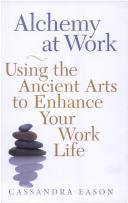
Alchemy at Work
by Cassandra Eason
ISBN 1-58091-158-7. Crossing Press. 330 page. Qpbk. $14.95
<< To order this book online at a discount, click on bookcover.
Alchemy at Work: Using the Ancient Arts to Enhance Your Work LIfe is a guide to using the ancient art of alchemy as a means of achieving career satisfaction and prosperity. The book is from a renowned British author and psychic, and therein is the chief clue to its contents. This book contains various forms of divination in general outlines (the author has also written The Complete Guide to Divination), several forms of psychic protection, as well as lists of crystals, basic universal meanings of symbols, gems, oils, incense and smudge sticks, as well as color meanings. All of this indicates that the real focus of this work is on using one’s innate, untapped abilities to expand your capabilities – which is a kind of alchemy all of us have access to. Go to Selections From This Book to see the Table of Contents and selected chapters.
From the Fire by Dennis William Hauck
I have accepted an offer to share the master of ceremonies position at the upcoming International Alchemy Conference along with Austrian chemist Hans Schimmer. Together we promise to keep things organized (as far as a group of alchemists can be organized). For complete information, go to www.AlchemyConference.com . Here is the current list of presenters (click on name for complete bio and links to lecturer’s websites):
- Robert Allen Bartlett – Practicing alchemist, author, chief chemist of Albertus’ Paracelsus Research Institute. New book is Real Alchemy.
- Paul Bartscher and Micah Nilsson – Practicing alchemists and plant spagyricists.
- Dr. Thom Cavalli – Jungian psychologist, writer, artist and teacher. Memmber of Alchemical Guild and the Hermetic Society. Author of Alchemical Psychology: Old Recipes for Living in the New World.
- Daniel Coaten – Practicing alchemist, medical herbalist, clinical aromatherapist, and lecturer who has a passion for herbal extraction research and botanical alchemy.
- Dr. Bruce Fisher – Hermeticist, spiritual alchemist, and author of over 20 books on alchemy.
- John Michael Greer – Hermetic scholar and author of over a dozen books on the Western esoteric tradition.
- Gudni Gudnason – Spiritual alchemist who studied with the Hermetic Order of the Golden Dawn in England and other mystery schools. Teaches at spiritual centers around the world, including Tibet, India, Japan, Europe, and the United States.
- Dr. Stanton Marlan – Author of The Black Sun: Alchemy and the Art of Darkness and other works on alchemy, as well as editor of Salt and the Alchemical Soul and Fire in the Stone. Jungian psychoanalyst and alchemy researcher.
- Jeff McBride – Practicing Hermeticist and world renowned performance Magician.
- Dr. Werner Nawrocki – Medical doctor and alchemist from Frankfurt, Germany. Initiated into alchemy by Frater Albertus in 1979. Author of Transformation: Secret of the World.
- Paul Rendak – Practicing alchemist and spagyricist. Former student of Frater Albertus.
- Duane Saari – Hermetic researcher and editor of the Alchemy Journal.
- Nicki Scully – Alchemical healer and explorer of Egytian and shamanic alchemy. Author of Alchemical Healing.
- Gary Stadler – Alchemical lab equipment developer. Artist.
- Tamara Stadler – Homeopathic alchemist and Hermetic musician.
- Mark Stavish – Practicing alchemist and author. Path of Alchemy: Energetic Healing and Natural Magic.
- Raoul Tollmann – Austrian alchemist and homeopathic spagyricist known for his rejuvenating gem elixir formulations.
- Timothy Wilkerson is a former student of Frater Albertus who attended Paracelsus College in Salt Lake City and graduated Prima in 1984.
Announcements
- The Alchemy Forum has been moved to a more secure site at www.AlchemyCode.com/Alchemy_Forum . The discussion board has sections for students in the Alchemy Home Study Program, the International Alchemy Guild, and other topics of interest to beginning and advanced practitioners. Former members are invited to return to this forum, which is going into its fifth year of operation.
- Writers Wanted! The Alchemy Journal is always looking for articles on any aspect of alchemy, including biographies, historical material, practical laboratory work, spagyric recipes, philosophical pieces, poetry, experiences in personal transformation, spiritual insights, Hermeticism, Gnosticism, book reviews, film and video reviews, website reviews, artwork, etc. Please submit your material or queries via email to our editor Duane Saari at [email protected].
Send your announcements to the Alchemy Journal.
Lectures & Conferences
October 5-7, 2007. International Alchemy Conference in Las Vegas, Nevada.
The International Alchemy Guild (IAG) is currently organizing what looks to be the largest gathering of alchemists and alchemical practitioners in 500 years. The goal is to represent all aspects of alchemy, including the practical and spiritual paths, East and West, and modern perspectives such as transpersonal psychology. The event is scheduled to take place over the Columbus Day weekend, October 5-7, 2007, in Las Vegas. Complete information can be found at www.AlchemyConference.com .
For a complete listing of other current lectures and workshops on alchemical topics, please go towww.AlchemyConference.com/lectures.htm .
EDITORIAL
From the Editor (by Duane Saari)
For much of its history, alchemy has been a secret, a guarded and obscure way of interacting with the world. It is famous, as well as infamous, for its intentionally hidden writings, laboratory practices and the names of its most important practitioners.
There are reasons. Originally, it was considered knowledge suitable only for an elite ruling or priest class. For a time, this powerful and “dangerous in the hands of the uninitiated” knowledge was shared with only initiates fully committed to its use for the greater good. Later, the Roman Catholic Church included it among the practices of the occult that lead unsuspecting souls to hell rather than heaven and persecuted its practitioners and teachers. Then, many alchemists were used by kings, rulers and the politically powerful for their personal ambitions. Eventually, this secret knowledge was driven almost completely into the dark, underground, unexplored side of developing societies and lost to most of us.
However, over the last several hundred years, individual alchemists, working alone with the preserved information and practices have kept this inheritance alive in their writings and laboratories across the globe. Alchemy is an understanding of the Light and, therefore, cannot be completely hidden away. It seeps out of the dark in myriad ways through the work of individual alchemists such as Isaac Newton or in some of the miracles of modern medicine. Its message is also being tapped by poets, songwriters and performers.
Examples of how alchemy permeates our culture are all around us. The Secret, a book and DVD published in 2006, is now a world wide phenomenon. According to its creators, the Emerald Tablet is the first statement of the Law of Attraction on which The Secret is based. Recently, I was approached by an individual who is planning a documentary on the relationship between The Secret and the Emerald Tablet.
Just last week, I took the time to review an excerpt from Al Gore’s new book: The Assault on Reason at www.Time.com and came across his use of the word alchemy. Gore was referred to Marshall McLuhan’s description of TV as a cool medium compared to the hot medium of print. Gore says it was hard for him “…to understand when I read it 40 years ago, because the source of “heat” in his metaphor is the mental work required in the alchemy of reading.” This is a very appropriate and revealing use of the term alchemy, not just a convenient use of the word. Fundamental to the work of alchemy is the use of heat; in some instances it comes from the worldly fire that can burn and in others the Fire of True Imagination – “the fire that does not burn.”
Last year, two conferences devoted to alchemy and its teachings were held. One, sponsored by the New York Open Center and co-sponsored by the Alchemy Museum in Kutna Hora and the Lumen Foundation, was held in Prague. It focused on the western esoteric tradition. The other was held in Philadelphia and sponsored by the Chemical Heritage Foundation. Many of the presenters at this conference spoke about the history of alchemy and its relationship to science.
Another alchemy conference will be held in Las Vegas this year on October 6 and 7. This one is sponsored by the International Alchemy Guild. It is attracting a world wide, eclectic group of individuals using alchemy in many different ways. One of the articles in this issue of the Journal is by Dennis Hauck who is central to the conference’s conception and development. Dennis writes about the purpose of the gathering and his vision for its impact.
We are surrounded by the influence of alchemy: its use in our public discourse, the expression of our deepest feelings in poetry such as that of Paul Hardacre’s in this issue, global conferences dedicated to it and the world wide response to the publication of The Secret.
Lying at the core of the Great Work is the use of light, whether from the fire of calcination or our imagination. Alchemy cannot stay hidden. I believe it is time to bring alchemy out of the dark and reveal its treasures.
Let me know if you agree or you don’t. Email me at: [email protected] .
Submissions
Submit your articles on any aspect of alchemy. We are looking for biographies, historical articles, practical laboratory work, spagyric recipes, philosophical pieces, experiences in personal transformation, spiritual insights, Hermeticism, Gnosticism, book reviews, film and video reviews, website reviews, artwork, etc. Please submit your material or queries via email to [email protected].
Subscriptions and Archives
The Alchemy Journal is published quarterly at the annual solstices and equinoxes. Issues are posted at the Alchemy Lab website on the journal archives page at www.AlchemyLab.com/journal.htm. This page also contains a Directory of Past Issues and an Index of Articles. To subscribe to the journal, simply send a blank email to [email protected].
- Alchemy Lab (Alchemy Articles, Files, and Gallery) www.AlchemyLab.com
- Alchemy Website (Original Alchemy Texts) www.levity.com/alchemy/
- Alchemergy (Modern Alchemy) www.Alchemergy.com
- Alchemy Code (Alchemy Forums & Chat) www.AlchemyCode.com
- Alchemy Guild (Membership Organization) www.AlchemyGuild.org
- Alchemy Guild Webring (Networking) www.AlchemyGuild.org/webring.htm
- Alchemy Conference (IAG Conference) www.AlchemyConference.com
- Alchemy Lectures & Workshops www.AlchemyConference.com/lectures.htm
- Crucible Catalog (Books, Tapes, Labware, Tinctures, Herbs) www.Crucible.org